


Ephesus for Cruise Passengers: A Complete Guide from Kusadasi Port
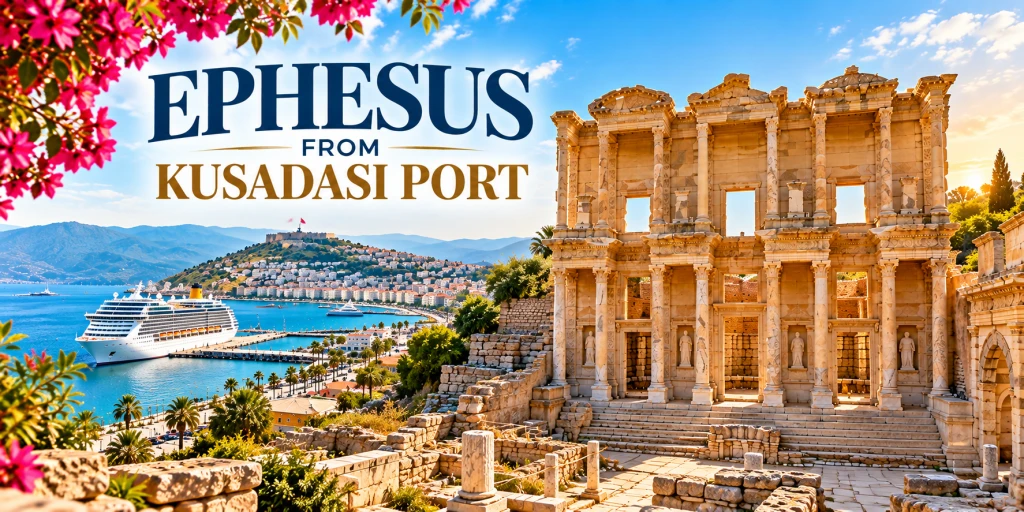
Ephesus for Cruise Passengers: A Complete Guide from Kusadasi Port
Arriving in Kusadasi by cruise ship gives you the opportunity to visit one of the most remarkable ancient cities in the Mediterranean: Ephesus.
Located approximately 20 kilometres from Kusadasi Cruise Port, Ephesus is close enough to explore during a port call and significant enough to be the highlight of your day in Türkiye.
If Ephesus is on your cruise itinerary, this guide will help you understand how to get there, how much time you need, what to see and how to plan your visit around your ship's schedule.
How Far Is Ephesus from Kusadasi Cruise Port?
Ephesus is approximately 20 kilometres from Kusadasi Cruise Port.
The journey normally takes around 25–30 minutes by private vehicle, depending on traffic and local conditions.
This short distance is one of the reasons Ephesus is such a popular destination for cruise passengers visiting Kusadasi.
Rather than spending several hours travelling to reach an attraction, you can devote most of your available time to exploring the ancient city and the surrounding historical sites.
How Much Time Do Cruise Passengers Need for Ephesus?
For the main archaeological site, most visitors should allow approximately two to three hours.
If you would also like to visit the Terrace Houses, you may want to allow additional time.
Cruise passengers with a longer port stay can combine Ephesus with other important attractions in the region, including:
- House of the Virgin Mary
- Temple of Artemis
- Basilica of St. John
- Şirince Village
The best itinerary depends on the amount of time your ship remains in Kusadasi.
What Should You See in Ephesus?
Ephesus contains an extraordinary collection of ancient monuments.
Library of Celsus
The Library of Celsus is the most recognizable building in Ephesus. Its monumental façade has become one of the symbols of the ancient city.
Curetes Street
Walking along Curetes Street allows you to experience the layout of ancient Ephesus while passing temples, fountains and important civic buildings.
Temple of Hadrian
Located along Curetes Street, the Temple of Hadrian is one of the most elegant surviving monuments within Ephesus.
Terrace Houses
The Terrace Houses reveal another side of Roman life.
These residences belonged to wealthy inhabitants of Ephesus and contain remarkable mosaics, wall paintings and marble decoration.
A separate admission ticket is generally required.
Great Theatre
The enormous Great Theatre demonstrates the scale of ancient Ephesus and could accommodate thousands of spectators.
It is also associated with the Biblical history of St. Paul in Ephesus.
Can Cruise Passengers Visit the House of the Virgin Mary?
Yes.
The House of the Virgin Mary is located on Mount Koressos near Ephesus and can easily be combined with a visit to the ancient city when your cruise schedule allows.
The site is particularly important for Christian visitors and pilgrims, but its peaceful setting also attracts travellers interested in the history and culture of the region.
The House of the Virgin Mary is outside the main Ephesus archaeological site and requires separate admission.
Can You Visit Ephesus and Şirince on the Same Day?
Yes, depending on the length of your port stay.
Şirince is a traditional hillside village near Selçuk, known for its historic houses, narrow streets and relaxed atmosphere.
Combining Ephesus and Şirince can be an excellent option for cruise passengers who would like to experience both ancient history and a different side of local Aegean life.
However, your ship's schedule should always determine how much you include in your day.
Private or Group Visit from Kusadasi Port?
Both options are available, but they provide different experiences.
Large group excursions normally follow a predetermined programme and schedule.
A private visit offers greater flexibility. The itinerary can be adjusted according to your interests, available time and the arrival and departure schedule of your cruise ship.
This can be particularly useful for families, couples and small groups who prefer to explore at their own pace.
Do You Need a Guide at Ephesus?
A licensed guide is not mandatory to enter Ephesus.
However, the ancient city contains thousands of years of Greek, Roman, Byzantine and early Christian history.
A professional licensed guide can explain the stories behind the monuments, the development of the city and the significance of sites that may otherwise appear simply as archaeological remains.
For visitors with limited time ashore, this can help make the visit more informative and easier to navigate.
What Should You Wear at Ephesus?
Ephesus is an extensive outdoor archaeological site, so comfortable footwear is important.
Ancient marble and stone surfaces can be uneven and occasionally slippery.
During the warmer months, consider bringing:
- Comfortable walking shoes
- Water
- Sunglasses
- A hat
- Sun protection
- Lightweight clothing
There is limited shade in some parts of the ancient city, particularly during the summer.
What Is the Best Time of Day to Visit Ephesus?
During the hot summer months, morning visits are generally more comfortable.
Temperatures can become high around midday, particularly in July and August.
Spring and autumn usually offer milder conditions for exploring the archaeological site.
For cruise passengers, however, the best time ultimately depends on your ship's arrival and departure schedule.
Don't Forget Your Ship's All-Aboard Time
This is the most important consideration for any cruise passenger visiting Ephesus.
Your itinerary should be planned around your ship's all-aboard time, not simply its published departure time.
Allow sufficient time for the return journey to Kusadasi Cruise Port and avoid planning an itinerary that leaves little margin for unexpected delays.
A well-planned Ephesus visit should be enjoyable and relaxed rather than a race back to the ship.
Is Ephesus Worth Visiting on a Cruise Stop in Kusadasi?
For travellers interested in history, archaeology, architecture or Biblical heritage, Ephesus offers an extraordinary experience within a short distance of Kusadasi Port.
In a single port day, you can walk along ancient marble streets, stand before the Library of Celsus, explore Roman homes and discover a city that played an important role in the history of the Mediterranean.
Its proximity to Kusadasi makes Ephesus particularly suitable for cruise passengers who want to make the most of their time ashore.
Plan Your Ephesus Visit from Kusadasi Port
Every cruise ship has a different schedule, and every traveller has different interests.
Whether you want to concentrate entirely on the ancient city or combine Ephesus with the House of the Virgin Mary, Terrace Houses, Basilica of St. John or Şirince, your day can be planned according to the time you have available.
Explore our Ephesus Shore Excursions from Kusadasi Port and choose the itinerary that suits your cruise schedule.